Whats App

How to Choose the Right Materials for Long-Lasting Interiors

ElenzaStaging
Category: Uncategorized

April 30, 2026

How to Choose the Right Materials for Long-Lasting Interiors


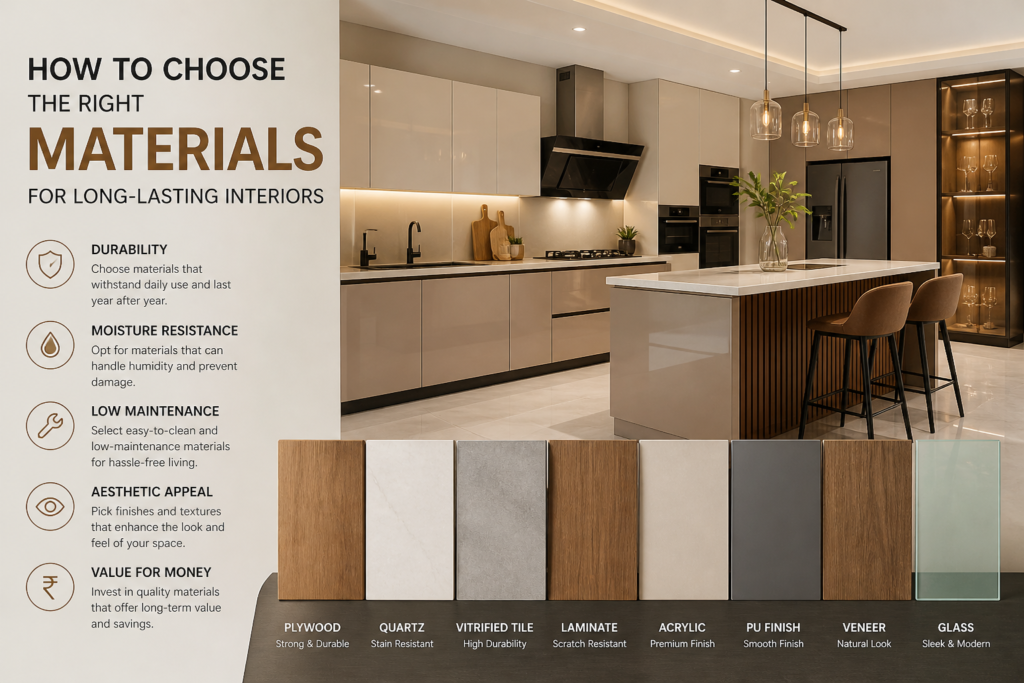
Creating a beautiful home is not just about design—it’s about making smart material choices that ensure durability, functionality, and long-term value. Many homeowners focus on colors and décor, but the real strength of any interior lies in the materials used behind the scenes. If you want interiors that look great even after years of use, understanding how to choose the right materials for long-lasting interiors is essential.

In growing urban spaces like Bengaluru, where apartments and villas are designed for modern living, selecting durable and practical materials becomes even more important. From modular kitchens to wardrobes and flooring, every element should be built to withstand daily wear and tear.

Why Material Selection is Crucial

The quality of materials directly impacts how your interiors perform over time. Poor material choices may lead to issues like swelling, scratches, fading, or structural damage. On the other hand, high-quality materials ensure:

  • Longer lifespan of furniture and fittings
  • Better resistance to moisture and heat
  • Low maintenance requirements
  • Consistent appearance over time
  • Higher return on investment

This is why professional interior designers in Bengaluru prioritize materials as much as design aesthetics.

Key Factors to Consider Before Choosing Materials

1. Durability Based on Usage

Different areas of your home experience different levels of usage. High-traffic areas like kitchens and living rooms require stronger materials compared to bedrooms.

  • Use BWR or marine plywood for kitchens
  • Choose scratch-resistant laminates for daily-use surfaces
  • Opt for vitrified tiles or stone flooring for heavy foot traffic

Durability ensures your interiors remain intact without frequent repairs.

2. Moisture and Climate Resistance

Even though Bengaluru has a moderate climate, humidity during monsoons can affect materials. Choosing moisture-resistant materials helps prevent long-term damage.

  • Avoid low-grade MDF in wet areas
  • Use treated plywood or engineered boards
  • Install anti-skid and water-resistant flooring in bathrooms

Climate-friendly materials increase the lifespan of your interiors.

3. Maintenance and Practicality

Some materials require regular polishing or special care, while others are easy to maintain. For modern lifestyles, low-maintenance materials are always a better choice.

  • Laminates are easier to clean than natural wood
  • Quartz countertops require less maintenance than marble
  • Matte finishes hide scratches better than glossy surfaces

Choosing practical materials reduces effort and upkeep costs.

4. Aesthetic Compatibility

Materials should match your interior theme while maintaining durability. A balanced combination creates a premium look without compromising functionality.

  • Wood adds warmth and richness
  • Glass creates openness and modern appeal
  • Metal adds a sleek, contemporary touch
  • Stone finishes enhance luxury

The right mix of materials helps achieve a cohesive design.

5. Budget vs Long-Term Value

While it’s tempting to cut costs, cheaper materials often lead to higher expenses later due to repairs or replacements. Investing in quality materials for key areas like kitchens and wardrobes ensures long-term savings.

Experienced home interior designers in Bengaluru can suggest alternatives that look premium while staying within budget.

Best Material Choices for Modular Interiors

Modern homes are increasingly shifting towards modular interiors for better efficiency and durability. Choosing the right materials for modular setups is crucial.

Modular Kitchen

  • Cabinets: Marine plywood or high-quality engineered boards
  • Shutters: Laminates, acrylic, or PU finish
  • Countertops: Granite or quartz for durability
  • Hardware: Rust-resistant hinges and channels

A well-built modular kitchen ensures long-term functionality with minimal maintenance.

Wardrobes and Storage Units

  • Structure: Plywood or engineered boards
  • Finishes: Laminates, glass, or acrylic panels
  • Sliding systems: High-quality tracks for smooth operation

These materials ensure wardrobes remain sturdy and visually appealing.

Living Room Furniture

  • TV units: Plywood with laminate or veneer finish
  • Shelving: Engineered wood with strong support
  • Wall panels: Textured laminates or decorative boards

Durable materials maintain structure while enhancing style.

Flooring Options

  • Vitrified tiles for durability and low maintenance
  • Marble for a luxurious look
  • Wooden flooring for warmth and comfort

Flooring plays a major role in both durability and aesthetics.

Common Mistakes to Avoid

While selecting materials, many homeowners make mistakes that affect long-term performance:

  • Prioritizing looks over durability
  • Choosing cheap materials for high-use areas
  • Ignoring moisture resistance
  • Not checking hardware quality
  • Using the same material everywhere

Avoiding these mistakes ensures better results and fewer future issues.

Why Modular Interior Solutions Are a Better Choice

Modern interior brands are moving towards factory-made modular solutions because they offer:

  • Consistent material quality
  • Precision manufacturing
  • Faster installation
  • Better finishing compared to on-site carpentry
  • Reduced wastage and errors

This approach ensures that your interiors are not only stylish but also long-lasting and reliable.

Designing for Durability and Style

Choosing the right materials is the foundation of interiors that not only look premium but also perform well over time. It’s not just about visual appeal—true quality lies in how materials handle daily use, resist wear, and maintain their finish for years.

By focusing on durability, low maintenance, and suitability for your lifestyle, you create spaces that remain elegant and functional without constant upkeep. Thoughtful material selection ensures that every element—from kitchens to wardrobes—delivers both strength and style.

In the long run, investing in the right materials is what transforms good interiors into lasting ones. With the right guidance and planning, you can achieve a perfect balance between aesthetics and durability, creating a home that stands the test of time.

Scroll to Top